

Al-Ghazali on Invocations and Supplications
About The Book
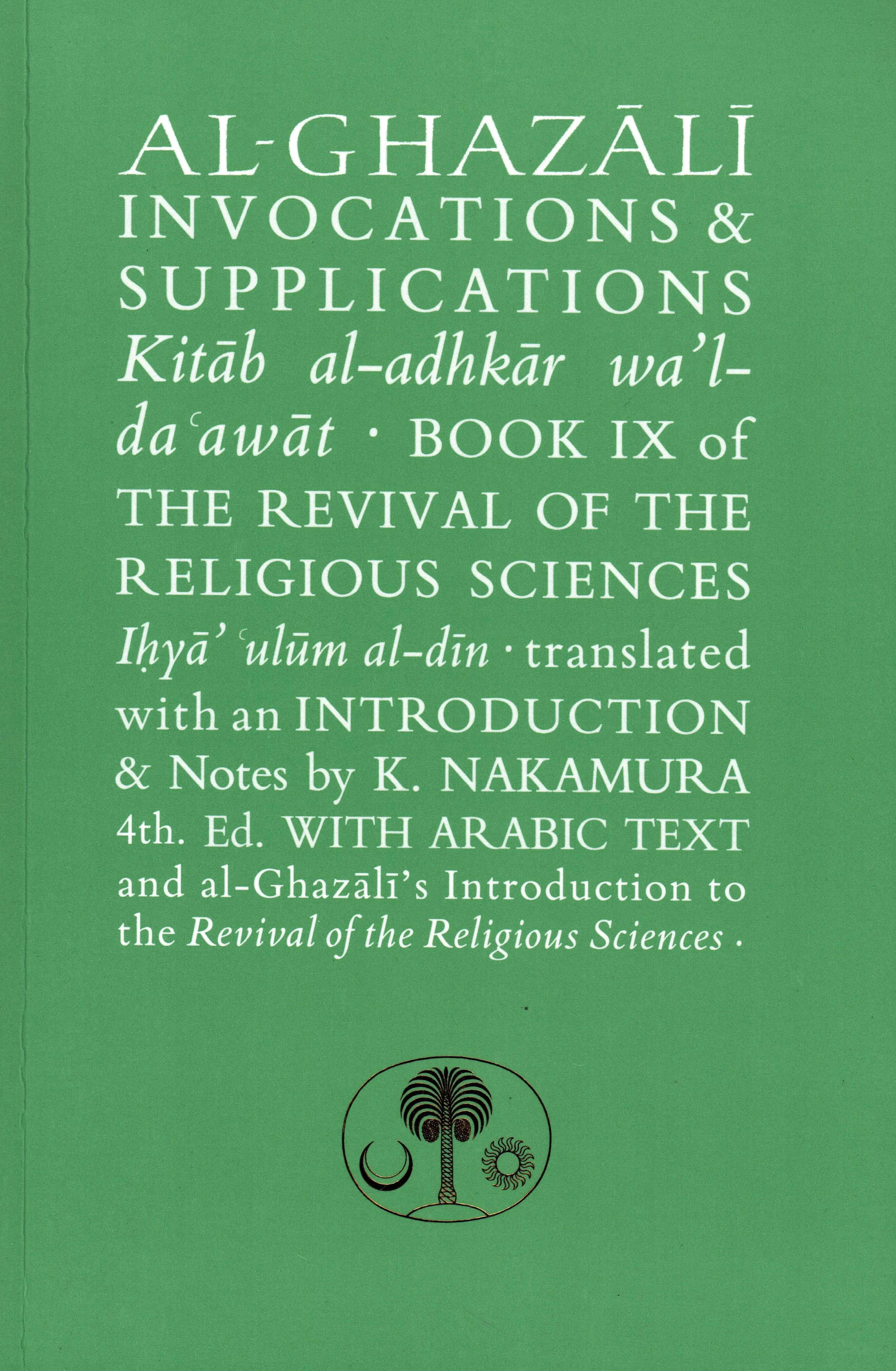
A revised edition of Kojiro Nakamura’s acclaimed translation into English of Book IX of The Revival of the Religious Sciences(Ihya’ ‘Ulum al-Din). Although prayerfulness and the remembrance of God suffuse all the formal practices of Islam, there are times when the Muslim simply ‘sits alone with his Lord’ to repeat formulas drawn from the Qur’an and the sayings of the Prophet, seeking remission of his sins and the purification of his heart.
The present volume is probably the most widely read compendium of such material, popular not only for its comprehensiveness and beauty, but also for the analytical approach of its author, who explores the psychological and spiritual effects of prayer and the celebration of God’s name. The original translation by Kojiro Nakamura, now Head of the Islamic Studies Department at the University of Tokyo, has been substantially revised and augmented with hadith identification.
This volume won a British Book Design and Production Award in 1991.
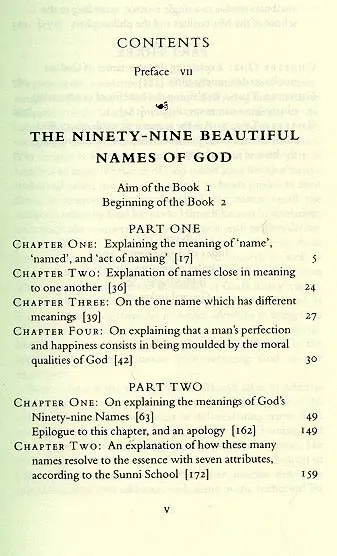
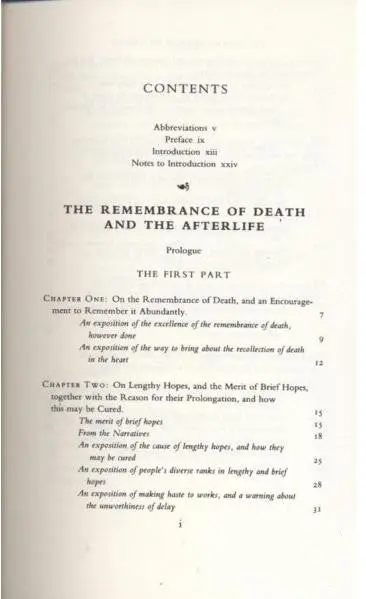
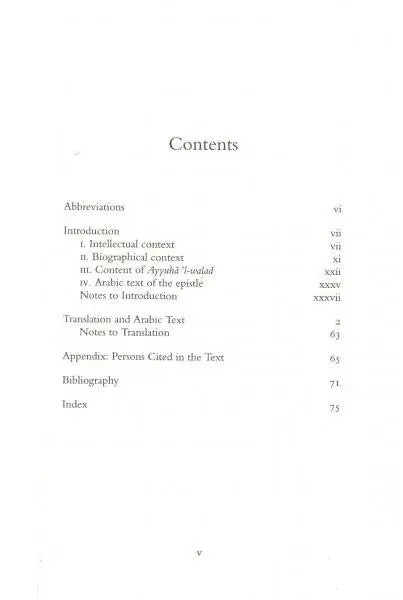
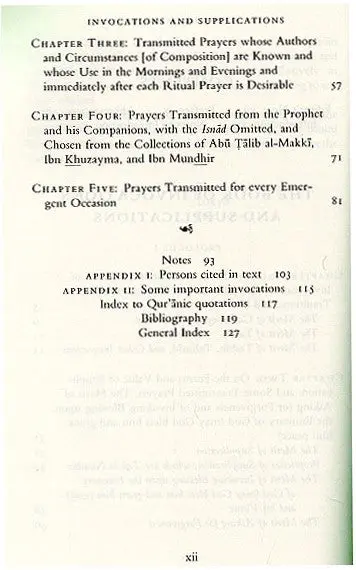
Table of Contents
- On the General Merit and Profit of Invocation
- On The Forms and Value of Supplication and Prayer
- Prayers for Use in the Mornings and Evenings
- Prayers Transmitted from the Prophet and His Companions
- Prayers Transmitted for Every Emergent Occasion
- Appendix I: Persons Cited in the Text
- Appendix II: Some Important Invocations
- Index to Qur’anic Quotations
- Bibliography
- General Index
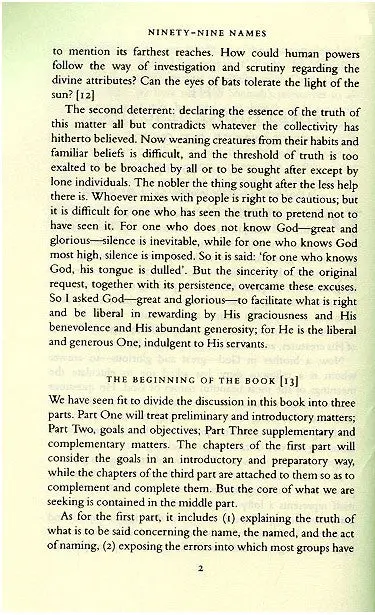
An Excerpt From The Book
On the General Merit and Profit of Invocation, with an Illustration from the Qur’an, the Traditions and the Narratives
From the Qur’an:
The general merit of invocation is testified to by the Word of God: Remember Me, and I will remember you. Thabit al-Bunani said, ‘Verily I know when my Lord remembers me’. So the people became alarmed at him and asked, ‘How do you know that?’ He said, ‘When I remember God, He remembers me’.
God has said, Remember God often, and When you rush together from Arafat in a crowd, remember God at the Holy Monument [al-mash’ar al-haram]; and remember Him as He has guided you and When you have completed your holy rites, remember God, as you remember your fathers, or more devoutly and ... those who remember God, standing, sitting, or lying down on their sides and When you have performed the ritual prayer [salat], remember God, standing, sitting, or lying down on your sides [on which] Ibn ‘Abbas (may God be pleased with him) commented, ‘That is: [remember God] whether at night or during the day whether travelling or remaining at home, whether in poverty or in riches, in sickness or in health, in private or in public’.
Denouncing the hypocrites, God (Exalted is He!) has said, They remember God but seldom. And He has said, Remember your Lord, in your soul, with humility and fear, not with a loud voice, morning and evening. Be not among the heedless. Truly the remembrance of God is greater. Ibn ‘Abbas (may God show him His mercy) said, ‘This has two interpretations: one is that God’s remembrance of you is greater than your remembrance of Him, and the other is that the remembrance of God is greater than any other act of worship’, etc.
From The Traditions:
The Emissary of God (may God bless him and grant him peace) said, ‘An invoker of God among the heedless is like a green tree in the midst of dry stalk’. He said (may God bless him an grant him peace), ‘An invoker of God among the heedless is like a fighter [for the sake of God] among deserters’.
He said (may God bless him and grant him peace), ‘God says, “I am with My servant so long as he invokes Me and his lips move for invoking Me”.
He said, ‘No act of a human being is so efficacious for deliverance from God’s punishment as the invocation of God (Great and Glorious is He!)’. The people asked, ‘O Emissary of God. Nor is the jihad for the sake of God so efficacious [as the invocation of God]?’ He said, ‘No, no jihad for the sake of God is so efficacious, except that you hit with your sword until it is intercepted and then you hit with it again until it is intercepted, and then you hit with it until it is intercepted, [while remembering God]’.
He said (may God bless him and grant him peace), ‘Let him who wishes to graze in the pastures of the Garden invoke God constantly’.
On being asked, ‘Which act is most meritorious?’ the Emissary of God (may God bless him and grant him peace) said, ‘[It is] that you die while your tongue is moistened with the invocation of God (Great and Glorious is He!)’.
He said, ‘Let your tongue be moistened with the invocation of God morning and evening, and then no fault will fall upon you’.
He said (may God bless him and grant him peace), ‘Truly the invocation of God (Great and Glorious is He!) morning and evening is more meritorious than breaking swords for the sake of God and giving wealth lavishly’.
He said (may God bless him and grant him peace), ‘God (Blessed and Exalted is He!) says, “When My servant remembers Me in his heart, I remember him in My heart. When he remembers Me in company [with others], I remember him in an even better company. When he draws near to Me a hand’s breadth, I draw near to him an arm’s length. When he draws near to Me an arm’s length, I draw near to him a fathom. When he draws near to Me walking, I draw near to him running—meaning by ‘running’ one’s quickness of response.
He said (may God bless him and grant him peace), ‘ God (Great and Glorious is He!) spreads His shade upon seven people on the day when there is no shade but His. Among them is a man who invoked God privately and whose eyes overflowed [with tears] from the fear of God’.
Abu’l-Darda said, ‘The Emissary of God (may God bless him and grant him peace) said, “Shall I not tell you about the best and purest of your works for your Lord, and the most exalted of them in your ranks, and the work which is better for you than encountering your enemy, with you striking their necks and them striking your necks?” Thereupon the people said, “What is that, O Emissary of God?” He said, “The constant remembrance of God”’.
The Emissary of God said, ‘God (Great and Glorious is He!) says, “He who is so occupied with the remembrance of me that does not make petition to Me, I will give him the best of what I give to suppliants”’.
About The Author
Imam Abu Hamid Muhammad Al-Ghazali was born in 450 AH (1058 A.D) in the Iranian town of Tus, studied Islamic law and theology at the Seljuq College in Nishapur, and became a distinguished professor at the famous Nizamiyya University in Baghdad.
Despite his glittering success, he was inwardly dissatisfied, so he abandoned his career for the life of hardship, abstinence and devotion to worship. During ten years of wandering, he experienced a spiritual transformation, in which the Truth came to him at last, as something received rather than acquired.
Blessed with an inner certainty, he then applied his outstanding faculties and vast learning to the task of revitalizing the whole Islamic tradition. Through his direct personal contacts, and through his many writings, he showed how every element in that tradition could and should be turned to its true purpose.
Imam al-Ghazzali was fondly referred to as the "Hujjat-ul-lslam", Proof of Islam, he is honoured as a scholar and a saint by learned men all over the world and is generally acclaimed as the most influential thinker of the Classical period of Islam.
He passed away in 505 AH (1111 A.D).
About The Translator
Kojiro Nakamura is a Japanese scholar of Islam. He is professor emeritus of Islamic studies at both Tokyo University and Oberlin University. Tokyo University's Department of Islamic Studies was the first such department in Japan, established in 1982 with Nakamura appointed as its first professor.
He translated and commented on portions of Al-Ghazali's Revival of Religious Sciences, his most important work, for the Islamic Texts Society in 1992. Much of Nakamura's effort has been spent on analysis of al-Ghazali's works, a number of which Nakamura has translated to the Japanese language.
Nakamura's Islam and Modernity also focuses on what he holds are four main streams of modern Islamic thought in order to frame Islamic studies within the wider field of religious studies. He also served as a conference chair at the first al-Manar conference organized by Routledge.
Original: $32.95
-70%$32.95
$9.88Product Information
Product Information
Shipping & Returns
Shipping & Returns
Description
About The Book
A revised edition of Kojiro Nakamura’s acclaimed translation into English of Book IX of The Revival of the Religious Sciences(Ihya’ ‘Ulum al-Din). Although prayerfulness and the remembrance of God suffuse all the formal practices of Islam, there are times when the Muslim simply ‘sits alone with his Lord’ to repeat formulas drawn from the Qur’an and the sayings of the Prophet, seeking remission of his sins and the purification of his heart.
The present volume is probably the most widely read compendium of such material, popular not only for its comprehensiveness and beauty, but also for the analytical approach of its author, who explores the psychological and spiritual effects of prayer and the celebration of God’s name. The original translation by Kojiro Nakamura, now Head of the Islamic Studies Department at the University of Tokyo, has been substantially revised and augmented with hadith identification.
This volume won a British Book Design and Production Award in 1991.
Table of Contents
- On the General Merit and Profit of Invocation
- On The Forms and Value of Supplication and Prayer
- Prayers for Use in the Mornings and Evenings
- Prayers Transmitted from the Prophet and His Companions
- Prayers Transmitted for Every Emergent Occasion
- Appendix I: Persons Cited in the Text
- Appendix II: Some Important Invocations
- Index to Qur’anic Quotations
- Bibliography
- General Index
An Excerpt From The Book
On the General Merit and Profit of Invocation, with an Illustration from the Qur’an, the Traditions and the Narratives
From the Qur’an:
The general merit of invocation is testified to by the Word of God: Remember Me, and I will remember you. Thabit al-Bunani said, ‘Verily I know when my Lord remembers me’. So the people became alarmed at him and asked, ‘How do you know that?’ He said, ‘When I remember God, He remembers me’.
God has said, Remember God often, and When you rush together from Arafat in a crowd, remember God at the Holy Monument [al-mash’ar al-haram]; and remember Him as He has guided you and When you have completed your holy rites, remember God, as you remember your fathers, or more devoutly and ... those who remember God, standing, sitting, or lying down on their sides and When you have performed the ritual prayer [salat], remember God, standing, sitting, or lying down on your sides [on which] Ibn ‘Abbas (may God be pleased with him) commented, ‘That is: [remember God] whether at night or during the day whether travelling or remaining at home, whether in poverty or in riches, in sickness or in health, in private or in public’.
Denouncing the hypocrites, God (Exalted is He!) has said, They remember God but seldom. And He has said, Remember your Lord, in your soul, with humility and fear, not with a loud voice, morning and evening. Be not among the heedless. Truly the remembrance of God is greater. Ibn ‘Abbas (may God show him His mercy) said, ‘This has two interpretations: one is that God’s remembrance of you is greater than your remembrance of Him, and the other is that the remembrance of God is greater than any other act of worship’, etc.
From The Traditions:
The Emissary of God (may God bless him and grant him peace) said, ‘An invoker of God among the heedless is like a green tree in the midst of dry stalk’. He said (may God bless him an grant him peace), ‘An invoker of God among the heedless is like a fighter [for the sake of God] among deserters’.
He said (may God bless him and grant him peace), ‘God says, “I am with My servant so long as he invokes Me and his lips move for invoking Me”.
He said, ‘No act of a human being is so efficacious for deliverance from God’s punishment as the invocation of God (Great and Glorious is He!)’. The people asked, ‘O Emissary of God. Nor is the jihad for the sake of God so efficacious [as the invocation of God]?’ He said, ‘No, no jihad for the sake of God is so efficacious, except that you hit with your sword until it is intercepted and then you hit with it again until it is intercepted, and then you hit with it until it is intercepted, [while remembering God]’.
He said (may God bless him and grant him peace), ‘Let him who wishes to graze in the pastures of the Garden invoke God constantly’.
On being asked, ‘Which act is most meritorious?’ the Emissary of God (may God bless him and grant him peace) said, ‘[It is] that you die while your tongue is moistened with the invocation of God (Great and Glorious is He!)’.
He said, ‘Let your tongue be moistened with the invocation of God morning and evening, and then no fault will fall upon you’.
He said (may God bless him and grant him peace), ‘Truly the invocation of God (Great and Glorious is He!) morning and evening is more meritorious than breaking swords for the sake of God and giving wealth lavishly’.
He said (may God bless him and grant him peace), ‘God (Blessed and Exalted is He!) says, “When My servant remembers Me in his heart, I remember him in My heart. When he remembers Me in company [with others], I remember him in an even better company. When he draws near to Me a hand’s breadth, I draw near to him an arm’s length. When he draws near to Me an arm’s length, I draw near to him a fathom. When he draws near to Me walking, I draw near to him running—meaning by ‘running’ one’s quickness of response.
He said (may God bless him and grant him peace), ‘ God (Great and Glorious is He!) spreads His shade upon seven people on the day when there is no shade but His. Among them is a man who invoked God privately and whose eyes overflowed [with tears] from the fear of God’.
Abu’l-Darda said, ‘The Emissary of God (may God bless him and grant him peace) said, “Shall I not tell you about the best and purest of your works for your Lord, and the most exalted of them in your ranks, and the work which is better for you than encountering your enemy, with you striking their necks and them striking your necks?” Thereupon the people said, “What is that, O Emissary of God?” He said, “The constant remembrance of God”’.
The Emissary of God said, ‘God (Great and Glorious is He!) says, “He who is so occupied with the remembrance of me that does not make petition to Me, I will give him the best of what I give to suppliants”’.
About The Author
Imam Abu Hamid Muhammad Al-Ghazali was born in 450 AH (1058 A.D) in the Iranian town of Tus, studied Islamic law and theology at the Seljuq College in Nishapur, and became a distinguished professor at the famous Nizamiyya University in Baghdad.
Despite his glittering success, he was inwardly dissatisfied, so he abandoned his career for the life of hardship, abstinence and devotion to worship. During ten years of wandering, he experienced a spiritual transformation, in which the Truth came to him at last, as something received rather than acquired.
Blessed with an inner certainty, he then applied his outstanding faculties and vast learning to the task of revitalizing the whole Islamic tradition. Through his direct personal contacts, and through his many writings, he showed how every element in that tradition could and should be turned to its true purpose.
Imam al-Ghazzali was fondly referred to as the "Hujjat-ul-lslam", Proof of Islam, he is honoured as a scholar and a saint by learned men all over the world and is generally acclaimed as the most influential thinker of the Classical period of Islam.
He passed away in 505 AH (1111 A.D).
About The Translator
Kojiro Nakamura is a Japanese scholar of Islam. He is professor emeritus of Islamic studies at both Tokyo University and Oberlin University. Tokyo University's Department of Islamic Studies was the first such department in Japan, established in 1982 with Nakamura appointed as its first professor.
He translated and commented on portions of Al-Ghazali's Revival of Religious Sciences, his most important work, for the Islamic Texts Society in 1992. Much of Nakamura's effort has been spent on analysis of al-Ghazali's works, a number of which Nakamura has translated to the Japanese language.
Nakamura's Islam and Modernity also focuses on what he holds are four main streams of modern Islamic thought in order to frame Islamic studies within the wider field of religious studies. He also served as a conference chair at the first al-Manar conference organized by Routledge.